
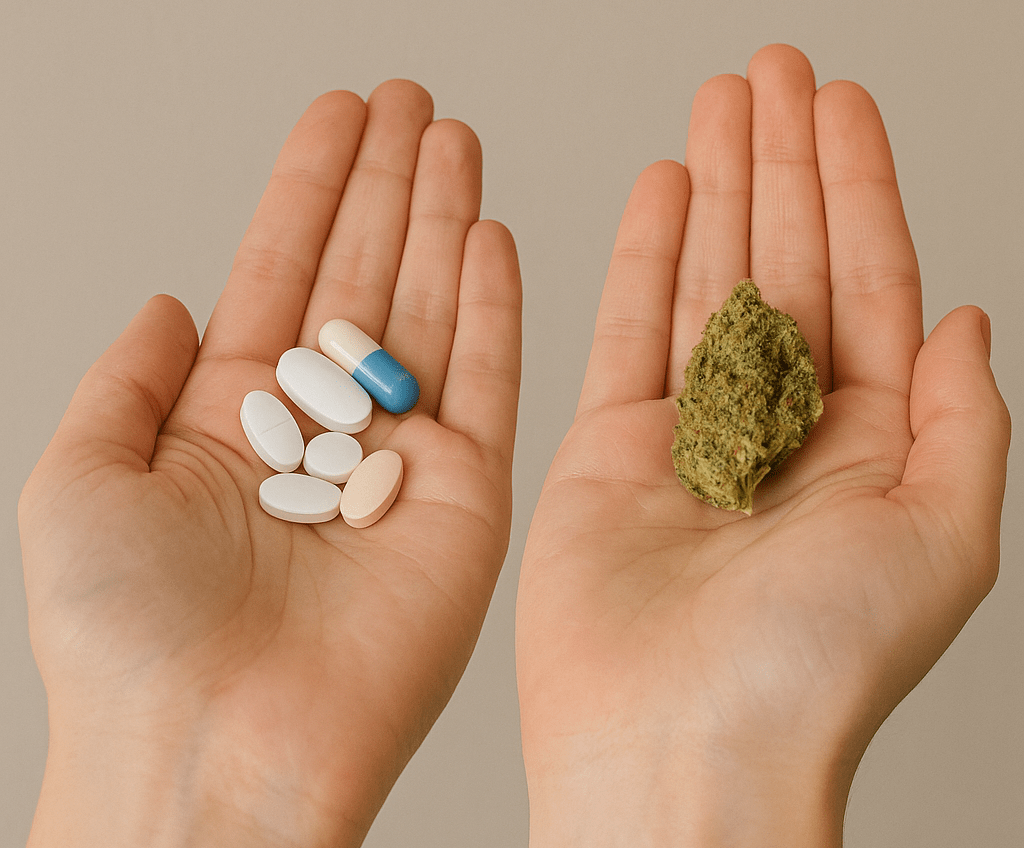
Patients in Malta living with chronic pain, anxiety and sleep disorders are often prescribed strong pharmaceuticals such as morphine, tramadol, benzodiazepines and zolpidem. While common in standard medical care, these medications carry significant risks — dependence, tolerance, cognitive impairment and withdrawal.
At The Pain Clinic, we believe that medical cannabis deserves to be considered as a legitimate, evidence-based option — especially for patients who haven’t found relief through conventional treatment, or who experience unacceptable adverse effects.
This isn’t about abandoning all other therapies. It’s about acknowledging that medical cannabis is a medication, supported by growing evidence, that can be prescribed safely and responsibly by trained clinicians.
Understanding the Risks of Standard Treatments
Chronic pain
Opioids such as morphine and tramadol pose a high risk of:
- Addiction
- Tolerance
- Sedation
- Constipation
- Respiratory depression
These medications can be life-saving in acute settings — but are associated with harm in long-term use.
Anxiety
Benzodiazepines are widely prescribed but associated with:
- Memory problems
- Dependence
- Cognitive impairment
- Difficult withdrawal syndromes
Insomnia
Sleep medications like zolpidem (Stilnox) can cause:
- Next-day drowsiness
- Impaired memory
- Dependence
- Rebound insomnia
Despite these risks, many long-term patients — including those who have completed detox programmes — continue to be prescribed these medications, yet may be denied access to cannabis, which may offer a safer long-term alternative.
What Medical Cannabis Really Is — and What It Is Not
One of the main barriers to progress is misconception. Many people, including some healthcare professionals, still associate cannabis with recreational use, addiction and a lack of control. This view is outdated.
Medical cannabis is a potent medication
Like all medications, it should be:
- Prescribed by a competent, informed doctor
- Titrated based on symptoms and response
- Kept out of reach of children
- Monitored for efficacy and side effects
It is nota recommendation to “smoke a joint and feel better”.
Medical cannabis should be individualised
Formulations may include oils, capsules, tablets and vaporisable preparations. The goal is targeted symptomatic relief with minimal side effects.
Lower addiction potential than opioids and benzodiazepines
…when used correctly and medically supervised. The aim isn’t intoxication — it’s improved clinical outcomes. Cannabis can be prescribed responsibly, sometimes using a green prescription where appropriate.
Evidence for Chronic Pain Relief — Strong and Consistent
A landmark report by the National Academies of Sciences, Engineering, and Medicine (2017) confirmed substantial evidence that cannabis is effective for chronic pain in adults.
Best recent studies (2024–2025)
2025 Review — Cannabinoids in Chronic Pain Management
Consistent improvements in neuropathic pain, MS-related pain, cancer pain and fibromyalgia, with reduced opioid use.
Read the study →2024 Systematic Review — Cannabis-Based Medicines for Chronic Neuropathic Pain
Reported clinically meaningful pain reduction vs placebo.
Read the study →Medical cannabis is increasingly recognised internationally as a legitimate, evidence-supported treatment for chronic pain — often enabling patients to safely reduce opioids.
CBD for Anxiety — A Safer Alternative to Benzodiazepines
CBD has been widely studied as a non-addictive, non-sedating anxiolytic.
Systematic Review & Meta-Analysis (2024)
Significant anxiolytic effect across several anxiety disorders.
Read the study →CBD for Treatment-Resistant Anxiety (2022)
Full-spectrum CBD extract significantly reduced anxiety and improved wellbeing in young adults.
Read the study →CBD may help patients stabilise anxiety without sedation, addiction or withdrawal — a key advantage over benzodiazepines.
CBD & CBN for Sleep — Promising Benefits for Insomnia
CBD and CBN may improve sleep by reducing pain, anxiety, hyperarousal and inflammation.
Randomised Controlled Trial with CBN (2026)
CBN promising for improving sleep quality.
Read the study →2024 Study — Cannabis Compound Improves Sleep
CBN shows clinical benefit for sleep quality.
Read the study →Shannon et al., 2019
66% of patients experienced improved sleep within the first month.
Read the study →CBD and CBN are especially suited for insomnia linked to pain, anxiety, or stress — without the risks associated with zolpidem.
A Missed Opportunity for Patients in Malta
Many patients who struggle with substance use are denied access to medical cannabis — yet continue to receive high-risk medications such as opioids and benzodiazepines. From a public health perspective, that’s contradictory.
Patients deserve:
- Compassionate care
- Modern evidence-based options
- Reduced harm — not increased risk
Medical cannabis isn’t a cure-all. But it’s a reasonable therapeutic option that can be prescribed responsibly.
Real Patients. Real Results.
Patients at The Pain Clinic often report:
- Reduced chronic pain
- Fewer side effects
- Better emotional stability
- Improved sleep
- Reduced reliance on opioids or sedatives
Their experience reflects the emerging scientific evidence.
A Balanced, Clinical Approach
Medical cannabis should be seen as one tool in a physician’s toolkit — not a political argument, not a shortcut and not a recreational suggestion.
Medicinal cannabis is a medicine — to be prescribed by a competent, well-informed, responsible doctor for chronic pain, anxiety and sleep disorders, with the goal of reducing suffering and minimising harm.
Let’s Talk About Safer Alternatives
If you’re ready to explore a treatment that’s safer, more natural and more sustainable, we’re here to guide you.